The Karkota Dynasty was one of the most powerful dynasties in the history of Kashmir. Questions related to Durlabhavardhana, Hiuen Tsang, Pratapaditya, Chandrapida, Lalitaditya Muktapida, Jayapida, and the Damaras are frequently asked in JKSSB, JKPSC, JK Police, JK Bank, JK High Court, and other Jammu and Kashmir competitive examinations.
This article by Exam Waves explains all the important facts about the Karkota Dynasty and also provides most important MCQs which will help you to rank better in any competitive exam
Karkota Dynasty (625–855 CE)
The Karkota Dynasty ruled Kashmir from 625 CE to 855 CE.
Important facts
- The dynasty ruled from 625 CE to 855 CE.
- It is also known as the Naga Dynasty.
- The founder was Durlabhavardhana (625–661 CE).
Durlabhavardhana (625–661 CE)
Durlabhavardhana established the Karkota Dynasty.
Important facts
- He was also known as Pragnaditya.
- He is mentioned as Tu-lo-pu in Chinese records.
- He was the son-in-law of Baladitya of the Gonanda Dynasty.
- He married Ananglekha, the daughter of Baladitya.
- He became the successor of Baladitya.
Hiuen Tsang’s visit
During his reign:
- Hiuen Tsang visited Kashmir in 631 CE.
- He entered Kashmir through the Baramulla route.
- He left Kashmir through the Zojila Pass in 633 CE.
Pratapaditya (661–712 CE)
Pratapaditya succeeded Durlabhavardhana.
Important facts
- His original name was Durlabhaka.
- He was known as Pratap Aditya.
- He founded Pratapapura, which is known as Tapper.
- He was succeeded by his son Chandrapida.
Chandrapida (713–720 AD)
Chandrapida was an important ruler of the Karkota Dynasty.
Important facts
- He was also known as Vajraditya.
- During his reign, Kashmir faced threats from:
- Arabs in the west
- Tibetans in the east
- He was succeeded by his brother Tarapida.
Tarapida
Tarapida ruled Kashmir after Chandrapida.
- He ruled for four years.
Lalitaditya Muktapida (724–761 AD)
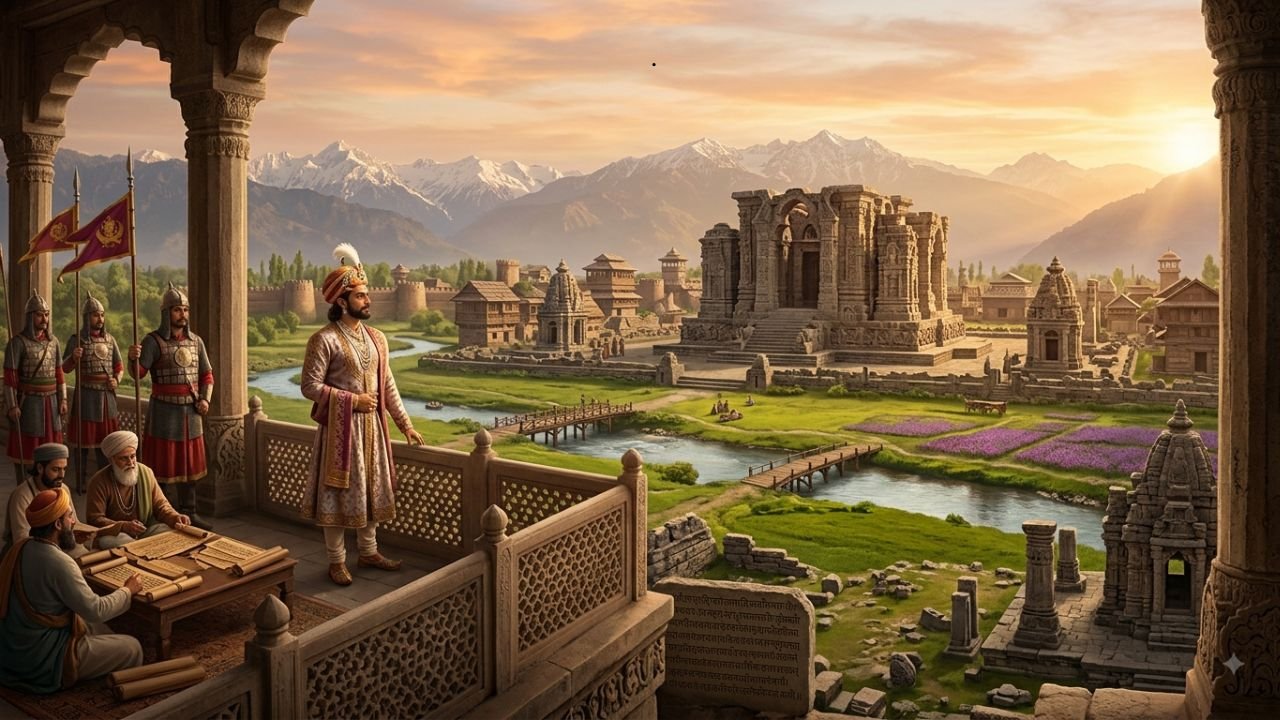
Lalitaditya Muktapida was the greatest ruler of the Karkota Dynasty.
Important facts
- He was the third son of Pratap Aditya.
- He is regarded as the greatest leader of the Karkota Dynasty.
- He shifted the capital to Parihaspora (City of Smiles).
- He was also known as Samudra Gupta of Kashmir.
- He ruled for 36 years.
Construction works
Lalitaditya built several important monuments.
- Martand Temple at Mattan (Anantnag)
- Lalitpur (Lethpora)
Literary patronage
His court included famous scholars and poets.
- Chanakya was his commander-in-chief.
- Bhavabhuti and Vakpatiraja were poets.
- He brought Atrigupta, the ancestor of Abhinavagupta, to Kashmir.
He is also known as the Napoleon of Kashmir.
Jayapida
Jayapida was the grandson of Lalitaditya Muktapida.
Important facts
- He built Jayapura near Wular Lake, now called Anderkot.
- He built Malanpur, presently known as Malur Srinagar.
- According to Kalhana, he was the last ruler of the Karkota Dynasty.
- He was murdered by his uncle in 840 CE.
- However, the last ruler of the Karkota Dynasty was Utpala.
Pamore
Padampur was founded by Padma, the maternal uncle of Chippata Jayapida.
The Damaras
The Damaras are mentioned in Book IV of Rajatarangini.
Important facts
- They were feudal lords.
- Sussala and Jayasimha spent a major part of their reign fighting against them.
Important note
After the death of Jayapida:
- His five uncles (Utpala, Mamma, Kalyana, Dharma, and Padma) fought among themselves for the throne.
- Utpala became king with the help of his minister.
Quick revision table
| Topic | Important Fact |
|---|---|
| Karkota Dynasty | 625–855 CE |
| Other name | Naga Dynasty |
| Founder | Durlabhavardhana |
| Durlabhavardhana | Also known as Pragnaditya |
| Chinese name | Tu-lo-pu |
| Hiuen Tsang visited | 631 CE |
| Pratapaditya | Founded Pratapapura (Tapper) |
| Chandrapida | Also known as Vajraditya |
| Tarapida | Ruled for four years |
| Lalitaditya | Greatest ruler of Karkota |
| Capital shifted to | Parihaspora |
| Famous temple | Martand Temple |
| Lalitaditya known as | Napoleon of Kashmir |
| Jayapida | Built Jayapura and Malanpur |
| Damaras | Feudal lords |
| Utpala | Last ruler of Karkota Dynasty |
Important Exam facts
- The Karkota Dynasty ruled from 625 CE to 855 CE.
- It is also known as the Naga Dynasty.
- Durlabhavardhana was the founder.
- Hiuen Tsang visited Kashmir in 631 CE.
- Pratapaditya founded Pratapapura (Tapper).
- Chandrapida was also known as Vajraditya.
- Lalitaditya shifted the capital to Parihaspora.
- He built the Martand Temple at Mattan (Anantnag).
- He is known as the Napoleon of Kashmir.
- Jayapida built Jayapura and Malanpur.
- The Damaras were feudal lords.
- Utpala became king after the struggle among Jayapida’s uncles.
Conclusion
The Karkota Dynasty was one of the greatest dynasties in the history of Kashmir. From Durlabhavardhana’s foundation of the dynasty to Lalitaditya’s powerful empire and Jayapida’s rule, the dynasty made important contributions to administration, architecture, literature, and culture. The Martand Temple, Parihaspora, Hiuen Tsang’s visit, and the rise of the Damaras are among the most important examination topics for JKSSB, JKPSC, JK Police, JK Bank, JK High Court, and other Jammu and Kashmir competitive examinations.
Important MCQ’S on Karkota Dynasty in Kashmir for all Competitive Exams
Q1. Which of the following statements correctly describe the Karkota Dynasty?
- The Karkota Dynasty ruled Kashmir from 625 CE to 855 CE.
- It was also known as the Naga Dynasty.
- Durlabhavardhana was the founder of the dynasty.
- The dynasty succeeded the Gonanda rulers through Durlabhavardhana’s marriage alliance.
A) 1 and 2 only
B) 1, 2 and 3 only
C) 2, 3 and 4 only
D) 1, 2, 3 and 4
Answer: D
Q2. Which of the following statements correctly describe Durlabhavardhana?
- He was also known as Pragnaditya.
- He is mentioned as Tu-lo-pu in Chinese records.
- He married Ananglekha, the daughter of Baladitya.
- He became the successor of Baladitya of the Gonanda Dynasty.
A) 1 and 2 only
B) 1, 2 and 3 only
C) 2, 3 and 4 only
D) 1, 2, 3 and 4
Answer: D
Q3. Which of the following statements correctly describe Hiuen Tsang’s visit to Kashmir during Durlabhavardhana’s reign?
- Hiuen Tsang visited Kashmir in 631 CE.
- He entered Kashmir through the Baramulla route.
- He left Kashmir through the Zojila Pass in 633 CE.
- His visit took place during the reign of Lalitaditya.
A) 1 and 2 only
B) 1, 2 and 3 only
C) 2, 3 and 4 only
D) 1, 2, 3 and 4
Answer: B
Q4. Which of the following statements correctly describe Pratapaditya?
- He succeeded Durlabhavardhana.
- His original name was Durlabhaka.
- He founded Pratapapura, known as Tapper.
- He was succeeded by his son Chandrapida.
A) 1 and 2 only
B) 1, 2 and 3 only
C) 2, 3 and 4 only
D) 1, 2, 3 and 4
Answer: D
Q5. Which of the following statements correctly describe Chandrapida?
- He was also known as Vajraditya.
- During his reign, Kashmir faced threats from the Arabs in the west.
- Kashmir also faced threats from the Tibetans in the east.
- He was succeeded by his brother Tarapida.
A) 1 and 2 only
B) 1, 2 and 3 only
C) 2, 3 and 4 only
D) 1, 2, 3 and 4
Answer: D
Q6. Which of the following statements correctly describe Lalitaditya Muktapida?
- He was the third son of Pratap Aditya.
- He shifted the capital to Parihaspora.
- He built the Martand Temple at Mattan (Anantnag).
- He is known as the Napoleon of Kashmir.
A) 1 and 2 only
B) 1, 2 and 3 only
C) 2, 3 and 4 only
D) 1, 2, 3 and 4
Answer: D
Q7. Which of the following statements correctly describe the achievements of Lalitaditya?
- He ruled for 36 years.
- He built Lalitpur (Lethpora).
- Bhavabhuti and Vakpatiraja were associated with his court.
- He brought Atrigupta, the ancestor of Abhinavagupta, to Kashmir.
A) 1 and 2 only
B) 1, 2 and 3 only
C) 2, 3 and 4 only
D) 1, 2, 3 and 4
Answer: D
Q8. Which of the following statements correctly describe Jayapida?
- He was the grandson of Lalitaditya Muktapida.
- He built Jayapura near Wular Lake, now called Anderkot.
- He built Malanpur, presently known as Malur Srinagar.
- According to Kalhana, he was the last ruler of the Karkota Dynasty.
A) 1 and 2 only
B) 1, 2 and 3 only
C) 2, 3 and 4 only
D) 1, 2, 3 and 4
Answer: D
Q9. Which of the following statements correctly describe the Damaras and the succession after Jayapida?
- The Damaras were feudal lords.
- Sussala and Jayasimha spent much of their reign fighting against them.
- After Jayapida’s death, his five uncles fought for the throne.
- Utpala became king with the help of his minister.
A) 1 and 2 only
B) 1, 2 and 3 only
C) 2, 3 and 4 only
D) 1, 2, 3 and 4
Answer: D
Q10. Which of the following statements correctly summarize the Karkota Dynasty according to the article?
- Durlabhavardhana founded the dynasty in 625 CE.
- Hiuen Tsang visited Kashmir during his reign.
- Lalitaditya shifted the capital to Parihaspora and built the Martand Temple.
- Utpala was the last ruler of the Karkota Dynasty.
A) 1 and 2 only
B) 1, 2 and 3 only
C) 2, 3 and 4 only
D) 1, 2, 3 and 4
Answer: D