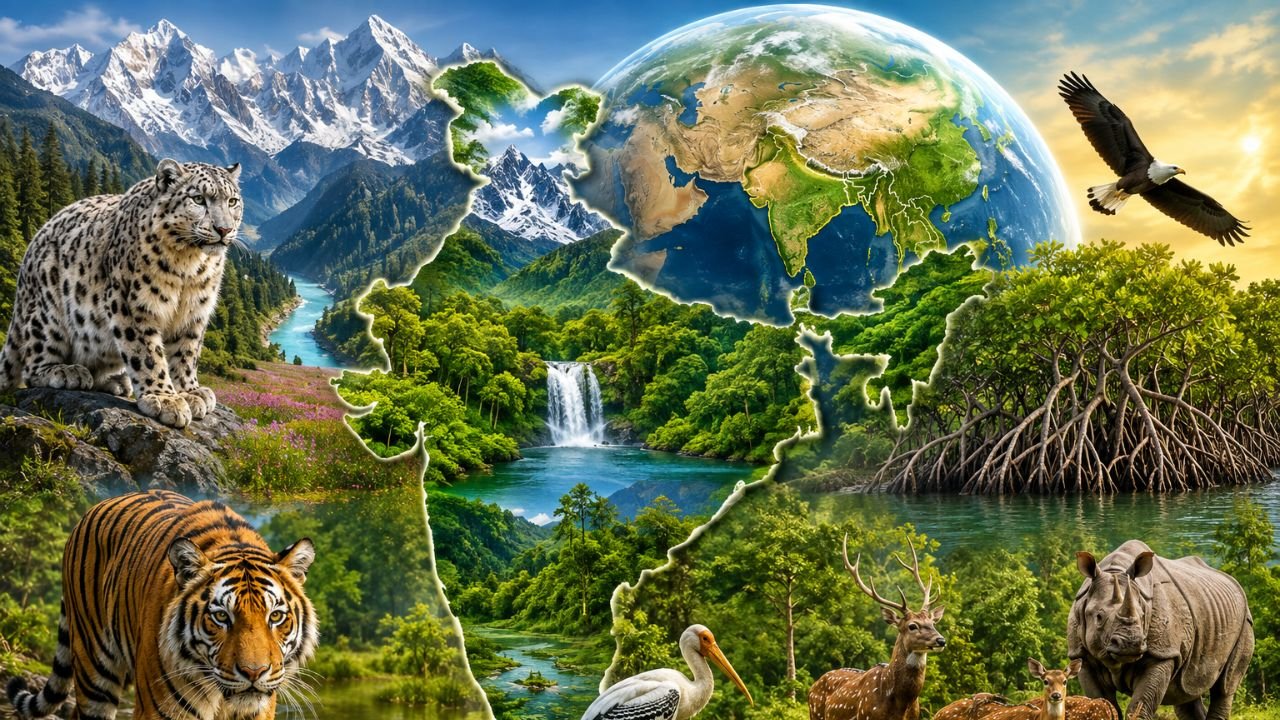
Dear aspirants, Biosphere Reserves in India are one of the most important topics in Static General Knowledge and are frequently asked in SSC, UPSC, Banking, Railway, Defence, State PSC, JKSSB, Police, Teaching, CUET, and other competitive examinations.
What is a Biosphere Reserve?
A Biosphere Reserve is a protected area established to conserve plants, animals, forests, wetlands, mountains, and other natural ecosystems while promoting sustainable use of natural resources.
Objectives of Biosphere Reserves
- Conservation of biodiversity
- Protection of endangered species
- Sustainable development
- Environmental education
- Scientific research and monitoring
Complete List of Biosphere Reserves in India
| Biosphere Reserve | State(s)/UT | Year Established | Famous For |
|---|---|---|---|
| Nilgiri | Tamil Nadu, Kerala & Karnataka | 1986 | First Biosphere Reserve of India, Nilgiri Tahr |
| Nanda Devi | Uttarakhand | 1988 | Nanda Devi Peak, Snow Leopard |
| Nokrek | Meghalaya | 1988 | Wild Citrus Species |
| Great Nicobar | Andaman & Nicobar Islands | 1989 | Nicobar Megapode |
| Gulf of Mannar | Tamil Nadu | 1989 | Coral Reefs and Marine Biodiversity |
| Manas | Assam | 1989 | Tiger, Elephant, Rhino |
| Sundarbans | West Bengal | 1989 | Royal Bengal Tiger, Mangroves |
| Simlipal | Odisha | 1994 | Tiger Reserve, Waterfalls |
| Dibru–Saikhowa | Assam | 1997 | Feral Horses and Wetlands |
| Dihang–Dibang | Arunachal Pradesh | 1998 | Mishmi Takin, Eastern Himalayas |
| Pachmarhi | Madhya Pradesh | 1999 | Satpura Ecosystem |
| Great Rann of Kutch | Gujarat | 1999 | Wild Ass and Salt Desert |
| Cold Desert | Himachal Pradesh | 1999 | Snow Leopard |
| Seshachalam Hills | Andhra Pradesh | 1999 | Red Sanders |
| Panna | Madhya Pradesh | 1999 | Tiger Reserve and Diamonds |
| Khangchendzonga | Sikkim | 2000 | Mount Khangchendzonga |
| Agasthyamalai | Kerala & Tamil Nadu | 2001 | Medicinal Plants |
| Achanakmar–Amarkantak | Chhattisgarh & Madhya Pradesh | 2005 | Source of Narmada River |
UNESCO World Network of Biosphere Reserves (WNBR)
The following Indian Biosphere Reserves have been recognized by UNESCO.
| Biosphere Reserve | UNESCO Recognition Year |
|---|---|
| Nilgiri | 2000 |
| Gulf of Mannar | 2001 |
| Sundarbans | 2001 |
| Nanda Devi | 2004 |
| Nokrek | 2009 |
| Pachmarhi | 2009 |
| Simlipal | 2009 |
| Achanakmar–Amarkantak | 2012 |
| Great Nicobar | 2013 |
| Agasthyamalai | 2016 |
| Khangchendzonga | 2018 |
| Panna | 2020 |
Important Facts for Competitive Exams
- Nilgiri is the first Biosphere Reserve in India, established in 1986.
- Nilgiri spreads across Tamil Nadu, Kerala, and Karnataka.
- Nanda Devi Biosphere Reserve is famous for Nanda Devi Peak and the Snow Leopard.
- Nokrek Biosphere Reserve is known for wild citrus species.
- Great Nicobar Biosphere Reserve protects the Nicobar Megapode.
- Gulf of Mannar is famous for its coral reefs and marine biodiversity.
- Manas Biosphere Reserve is known for the Tiger, Elephant, and Rhino.
- Sundarbans Biosphere Reserve is famous for the Royal Bengal Tiger and Mangrove forests.
- Simlipal Biosphere Reserve is known for its Tiger Reserve and waterfalls.
- Dibru–Saikhowa is famous for feral horses and wetlands.
- Dihang–Dibang is known for the Mishmi Takin and the Eastern Himalayas.
- Pachmarhi represents the Satpura Ecosystem.
- Great Rann of Kutch is famous for the Wild Ass and the Salt Desert.
- Cold Desert Biosphere Reserve is known for the Snow Leopard.
- Seshachalam Hills is famous for Red Sanders.
- Panna Biosphere Reserve is known for its Tiger Reserve and Diamond deposits.
- Khangchendzonga Biosphere Reserve is famous for Mount Khangchendzonga.
- Agasthyamalai is rich in medicinal plants.
- Achanakmar–Amarkantak is the source region of the Narmada River.
Quick Revision Table
| Feature | Biosphere Reserve |
|---|---|
| First Biosphere Reserve in India | Nilgiri |
| Famous for Nilgiri Tahr | Nilgiri |
| Famous for Snow Leopard | Nanda Devi, Cold Desert |
| Famous for Wild Citrus Species | Nokrek |
| Famous for Coral Reefs | Gulf of Mannar |
| Famous for Royal Bengal Tiger | Sundarbans |
| Famous for Mangroves | Sundarbans |
| Famous for Feral Horses | Dibru–Saikhowa |
| Famous for Mishmi Takin | Dihang–Dibang |
| Famous for Satpura Ecosystem | Pachmarhi |
| Famous for Wild Ass | Great Rann of Kutch |
| Famous for Red Sanders | Seshachalam Hills |
| Famous for Medicinal Plants | Agasthyamalai |
| Source of Narmada River | Achanakmar–Amarkantak |
| Famous for Diamonds | Panna |
UNESCO Biosphere Reserves – Quick Revision
| UNESCO Year | Biosphere Reserve |
|---|---|
| 2000 | Nilgiri |
| 2001 | Gulf of Mannar |
| 2001 | Sundarbans |
| 2004 | Nanda Devi |
| 2009 | Nokrek |
| 2009 | Pachmarhi |
| 2009 | Simlipal |
| 2012 | Achanakmar–Amarkantak |
| 2013 | Great Nicobar |
| 2016 | Agasthyamalai |
| 2018 | Khangchendzonga |
| 2020 | Panna |
Conclusion
Biosphere Reserves in India is a high-scoring Static GK topic that appears regularly in SSC, UPSC, Banking, Railway, JKSSB, Defence, Police, State PSC, and other competitive examinations. Candidates should revise the state-wise list, year of establishment, famous features, and the UNESCO World Network of Biosphere Reserves (WNBR) to improve accuracy in the General Awareness section.
Important MCQs on Biosphere Reserves in India
Q1. Which of the following statements are correct?
- Nilgiri is the first Biosphere Reserve established in India.
- It extends across Tamil Nadu, Kerala, and Karnataka.
- It is famous for the Nilgiri Tahr.
A) 1 only
B) 1 and 2 only
C) 2 and 3 only
D) 1, 2 and 3
✅ Answer: D
Q2. Which one of the following pairs is incorrectly matched?
A) Nanda Devi — Snow Leopard
B) Nokrek — Wild Citrus Species
C) Great Nicobar — Red Sanders
D) Gulf of Mannar — Coral Reefs
✅ Answer: C
Q3. Which of the following Biosphere Reserves are located in Assam?
- Manas
- Dibru–Saikhowa
- Nokrek
A) 1 only
B) 1 and 2 only
C) 2 and 3 only
D) 1, 2 and 3
✅ Answer: B
Q4. Which Biosphere Reserve is famous for the Royal Bengal Tiger and Mangrove forests?
A) Simlipal
B) Sundarbans
C) Manas
D) Panna
✅ Answer: B
Q5. Which of the following statements are correct?
- Gulf of Mannar Biosphere Reserve is located in Tamil Nadu.
- It is famous for Coral Reefs.
- It is known for Marine Biodiversity.
A) 1 only
B) 2 only
C) 1 and 2 only
D) 1, 2 and 3
✅ Answer: D
Q6. Which one of the following pairs is correctly matched?
A) Simlipal — Tiger Reserve and Waterfalls
B) Dihang–Dibang — Wild Ass
C) Pachmarhi — Mangroves
D) Cold Desert — Coral Reefs
✅ Answer: A
Q7. Which of the following statements are correct?
- Dibru–Saikhowa is famous for Feral Horses.
- It is also known for Wetlands.
- It is located in Assam.
A) 1 only
B) 1 and 2 only
C) 2 and 3 only
D) 1, 2 and 3
✅ Answer: D
Q8. Dihang–Dibang Biosphere Reserve is associated with which of the following?
A) Red Sanders
B) Mishmi Takin
C) Coral Reefs
D) Nilgiri Tahr
✅ Answer: B
Q9. Which of the following statements are correct?
- Pachmarhi Biosphere Reserve represents the Satpura Ecosystem.
- It is located in Madhya Pradesh.
- It received UNESCO recognition in 2009.
A) 1 only
B) 1 and 2 only
C) 2 and 3 only
D) 1, 2 and 3
✅ Answer: D
Q10. Which one of the following Biosphere Reserves is famous for the Wild Ass and Salt Desert?
A) Cold Desert
B) Great Rann of Kutch
C) Great Nicobar
D) Manas
✅ Answer: B
Q11. Which of the following statements are correct?
- Cold Desert Biosphere Reserve is located in Himachal Pradesh.
- It is famous for the Snow Leopard.
- It was established in 1999.
A) 1 only
B) 1 and 2 only
C) 2 and 3 only
D) 1, 2 and 3
✅ Answer: D
Q12. Which one of the following pairs is incorrectly matched?
A) Seshachalam Hills — Red Sanders
B) Panna — Tiger Reserve and Diamonds
C) Agasthyamalai — Coral Reefs
D) Khangchendzonga — Mount Khangchendzonga
✅ Answer: C
Q13. Which of the following statements are correct?
- Agasthyamalai is spread across Kerala and Tamil Nadu.
- It is famous for Medicinal Plants.
- It received UNESCO recognition in 2016.
A) 1 only
B) 2 only
C) 1 and 2 only
D) 1, 2 and 3
✅ Answer: D
Q14. Achanakmar–Amarkantak Biosphere Reserve is best known for which of the following?
A) Source of the Narmada River
B) Wild Citrus Species
C) Mangrove Forests
D) Snow Leopard
✅ Answer: A
Q15. Which of the following Biosphere Reserves were recognized by UNESCO in 2001?
- Gulf of Mannar
- Sundarbans
- Nilgiri
A) 1 only
B) 1 and 2 only
C) 2 and 3 only
D) 1, 2 and 3
✅ Answer: B
Q16. Arrange the following Biosphere Reserves according to their UNESCO recognition year.
- Nilgiri
- Nanda Devi
- Panna
A) 1–2–3
B) 2–1–3
C) 1–3–2
D) 3–2–1
✅ Answer: A
Q17. Which one of the following pairs is correctly matched?
A) Nokrek — UNESCO Recognition (2009)
B) Great Nicobar — UNESCO Recognition (2001)
C) Simlipal — UNESCO Recognition (2016)
D) Panna — UNESCO Recognition (2018)
✅ Answer: A
Q18. Which of the following statements are correct?
- Simlipal received UNESCO recognition in 2009.
- Great Nicobar received UNESCO recognition in 2013.
- Khangchendzonga received UNESCO recognition in 2018.
A) 1 only
B) 1 and 2 only
C) 2 and 3 only
D) 1, 2 and 3
✅ Answer: D
Q19. Which one of the following Biosphere Reserves received UNESCO recognition most recently among the following?
A) Pachmarhi
B) Great Nicobar
C) Agasthyamalai
D) Panna
✅ Answer: D
Q20. Which of the following statements are correct?
- India has Biosphere Reserves recognized under the UNESCO World Network of Biosphere Reserves.
- Nilgiri was the first Indian Biosphere Reserve to receive UNESCO recognition.
- Panna received UNESCO recognition in 2020.
A) 1 only
B) 1 and 2 only
C) 2 and 3 only
D) 1, 2 and 3
✅ Answer: D