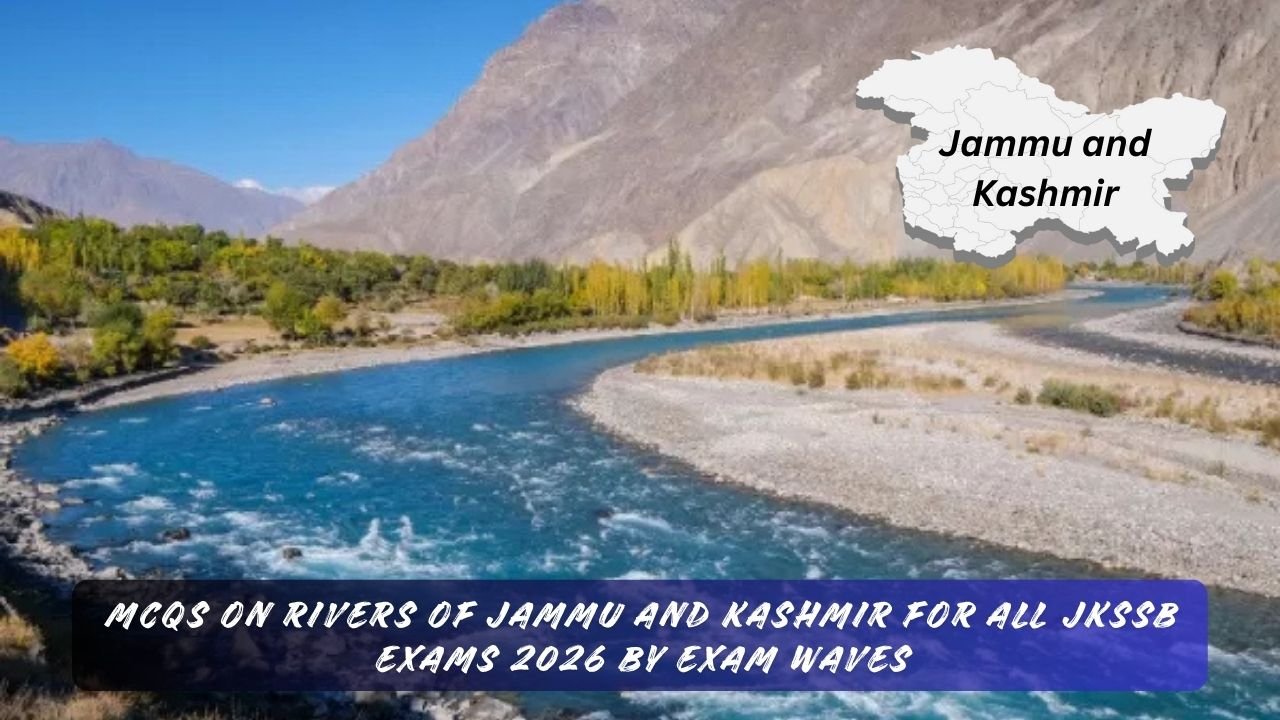
Rivers of Jammu & Kashmir are very important for all JKSSB 2026 exams. Questions are often asked about river origins, ancient names, and tributaries. Try out these MCQs related to Jhelum, Chenab, Ravi, Tawi, and Marusudar river which will help students to score better and clear JKSSB competitive exams confidently.
Q1. Which among the following statements is/are right about the Jhelum River?
a) The ancient Sanskrit name is Vitasta
b) Pohru is the left bank tributary
c) Romshi is the right bank tributary
d) Neelum River is the longest tributary of the Jhelum
Options:
a) A, B, C
b) B, C, D
c) A, D
d) A, C
The right Answer is: c) A, D
Brief Explanation:
The ancient Sanskrit name of the Jhelum River is Vitasta, and the Neelum (Kishanganga) River is its longest tributary. Pohru is not a left bank tributary, and Romshi is not a right bank tributary.
Q2. Which among the following is right about the Chenab River?
a) River Marusudar joins it at Bhandra Kot in J&K
b) It merges with the Ravi River near Uch, Pakistan
c) Its ancient name is Ashkini
d) Tawi is the right bank tributary of Chenab
Options:
a) A, C
b) A, B, C
c) A, B, D
d) A, D
The right Answer is: a) A, C
Brief Explanation:
The Marsudur River joins the Chenab at Bhandra Kot, and the ancient name of the Chenab River is Ashkini. Chenab does not merge with Ravi near Uch, Pakistan, and Tawi is not its right bank tributary.
Q3. Consider the following rivers as right bank tributaries of Chenab:
a) Jhelum
b) Tawi
c) Ravi
d) Anji
Options:
a) A, B, C
b) A, B
c) A, D
d) A, C
The right Answer is: c) A, D
Brief Explanation:
Jhelum and Anji are right bank tributaries of the Chenab River, while Tawi and Ravi are not right bank tributaries of the Chenab.
Q4. Which among the following is the longest tributary of the Ravi River?
a) Ujh
b) Naaz
c) Devika
d) None
The right Answer is: a) Ujh
Brief Explanation:
The Ujh River is the longest and most important tributary of the Ravi River, flowing through the Jammu region.
Q5. Sambha town is located on the banks of which river?
a) Devika
b) Basantar
c) Bhini
d) Neeru
The right Answer is: b) Basantar
Brief Explanation:
Sambha town is situated on the banks of the Basantar River, which flows through parts of Jammu region.
Q6. Consider the following about Tawi River?
a) It originates in Kailash Kund
b) Ancient name is Surya Putri
c) Jammu is situated on its bank
d) All of the above
The right Answer is: d) All of the above
Brief Explanation:
The Tawi River originates from Kailash Kund, is traditionally known as Surya Putri, and the city of Jammu is located on its banks.
Q7. Consider the following about the tributaries of the Jhelum River?
a) Arapath
b) Sukhnag
c) Neeru
d) Vishav
Options:
a) a, b
b) b, d
c) a, b, d
d) a, b, c
The right Answer is: c) A, b, d
Brief Explanation:
Sukhnag , Vishav and Arapath are tributaries of the Jhelum River, while Neeru is not a tributary of the Jhelum
Q8. Consider the following about the Marusudar River?
a) Originates in Nun Kun Glacier
b) Joins Chenab at Bhandra Kot
c) It is the largest Tributary of the Chenab
d) All of the above
The right Answer is: d) All of the above
Brief Explanation:
Marusudur River Originates in Nun Kun Glacier; its waters ultimately join the Chenab system, and it is considered the largest River associated with the Chenab basin.
Q9. Naaz River is the tributary of which river?
a) Basantar
b) Devika
c) Ujh
d) Neeru
The right Answer is: c) Ujh
Brief Explanation:
The Naaz River is a tributary of the Ujh River, contributing to its drainage system in the Jammu region.
Q10. Consider the following. Choose the correct statements.
a) Ravi originates from the Bara Bhanga Kullu hills
b) Ancient name is Iravati
c) Budhil and Sahu are its right bank tributaries (RBT)
d) Chirchind Nallah is its left Bank Tributary
Options:
a) a & b
b) a & c
c) a, b & c
d) a, b, c & d
The right Answer is: d) a, b, c & d
Brief Explanation:
The Ravi River originates from the Bara Bhangal region of the Dhauladhar range. Its ancient name is Iravati. Budhail and Sahu are among its tributaries.
Q11. Which one of the following rivers joins Jhelum at Shadipora?
a) Sindh
b) Lidder
c) Romshi
d) Vishav
The right Answer is: a) Sindh
Brief Explanation:
The Sindh River is a major tributary of the Jhelum and joins it near Shadipora in Jammu and Kashmir.
Q12. Which one of the following rivers originates from Kolahoi Glacier?
a) Vishav
b) Lidder
c) Ningal
d) Sukhnag
The right Answer is: b) Lidder
Brief Explanation:
The Lidder River originates from the Kolahoi Glacier and is an important tributary of the Jhelum River.
Q13. Which among the following is/are (LBT) of the Jhelum River?
a) Ningal
b) Doodhganga
c) Lidder
d) Arapath
Options:
a) a & b
b) b & c
c) c & d
d) a, b & c
The right Answer is: a) A & B
Brief Explanation:
Doodhganga and Ningal are well-known Left Bank tributaries of the Jhelum River.
Q14. Which river is known as “Gupt Ganga”?
a) Basantar
b) Devika
c) Kalani
d) Sewa
The right Answer is: b) Devika
Brief Explanation:
The Devika River is popularly known as Gupt Ganga and holds religious significance in the Jammu region.
Q15. Which of the following rivers meets the Jhelum River at Mirgund Khanbal?
a) Lidder
b) Poonch
c) Sindh
d) Ningal
The right Answer is: A) Lidder
Brief Explanation:
Lidder River ultimately meets the Jhelum River at Mirgund Khanbal.